
More biography below picture…
“¡Viva Cristo Rey!” means:
“Long live Christ the King!”
It’s both a profession of faith and a defiant proclamation that Christ’s authority is higher than any earthly power.
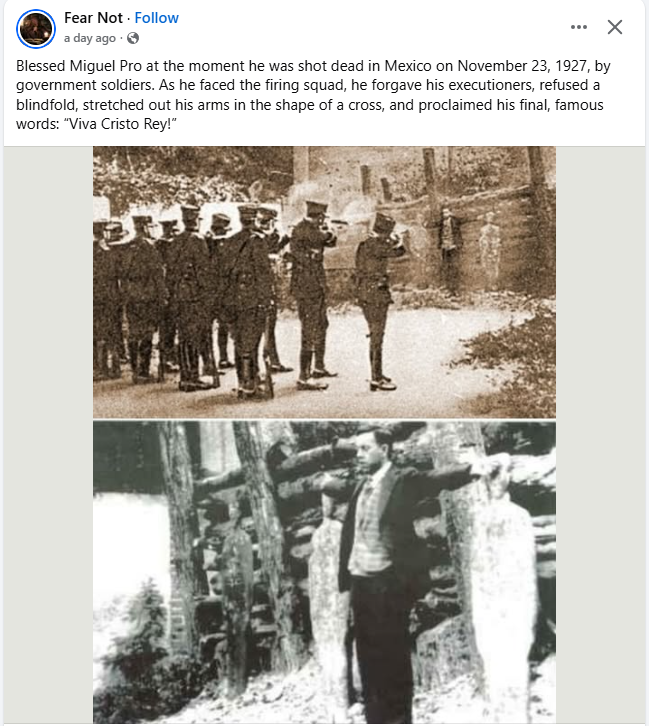
Blessed Miguel Agustín Pro, S.J. (1891–1927) was a Mexican Jesuit priest and martyr, widely loved for his courage, humor, and total trust in Christ during intense anti-Catholic persecution.
Here’s a clear, sober portrait:
Who he was
- Born: January 13, 1891, Guadalupe, Zacatecas, Mexico
- Jesuit priest, ordained in 1925 after years of exile and illness
- Lived during the Cristero persecution, when the Mexican government outlawed public Catholic worship and hunted priests
His ministry
Because priests were illegal, Fr. Pro:
- Celebrated Mass secretly in homes
- Heard confessions while disguised (mechanic, street vendor, musician)
- Brought the sacraments to the poor, the sick, and those about to die
- Used humor and cheerfulness as a pastoral weapon against fear
Despite constant danger, witnesses consistently note his joy, serenity, and interior freedom—not recklessness, but trust.
Arrest and martyrdom
- Falsely accused of involvement in a bombing attempt (no trial, no evidence)
- Executed November 23, 1927
- The government photographed his execution to intimidate Catholics
→ instead, the images inspired faith worldwide
His final moments:
- Refused blindfold
- Stretched out his arms like a cross
- Shouted “¡Viva Cristo Rey!” (“Long live Christ the King!”)
- Forgave his executioners openly
Why the Church honors him
- Martyrdom in odium fidei (killed out of hatred for the faith)
- A model of:
- Lay and priestly courage under persecution
- Interior joy amid suffering
- Fidelity without fanaticism
- Beatified in 1988 by St. John Paul II
Spiritual significance (especially relevant today)
Blessed Miguel Pro shows that:
- Sanctity can be playful and human, not grim
- Deep faith does not always look “ecstatic” or extraordinary on the outside
- God sometimes gives interior freedom and joy, not visions, to sustain souls under pressure
- Laypeople and priests alike can be called to quiet heroism